
She Rang Three Driving Schools at 8pm. The One With the Booking Link Got Her £1,700.
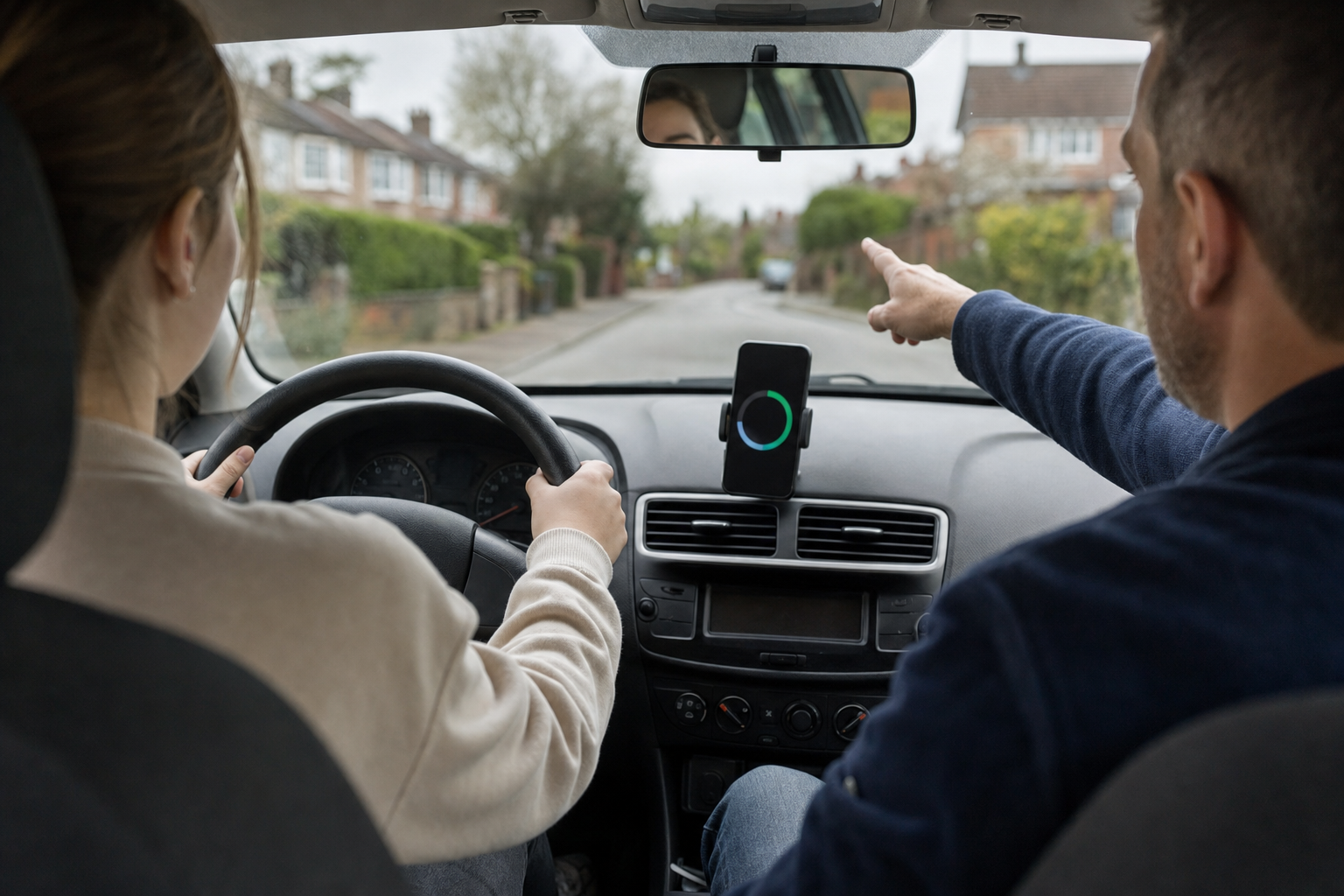
Every driving school owner I've spoken to describes the same evening. The instructors are all out in cars. The phone rings. It goes to voicemail. The learner, who is 17 and has never left a voicemail in her life, closes the tab and taps the next school on the list.
By the time anyone calls her back, she's paid a deposit somewhere else.
That's a £1,700 customer gone, roughly the value of the 45 hours the average learner needs at £38 an hour. And it happens several times a week at any school busy enough to have every instructor booked out.
The blueprint that fixes it is here: Driving Schools, Instant Instructor Match, Lesson Pack Sales and Test-Readiness Tracker. One master prompt builds the whole thing in Lovable: learner booking, instructor diary, owner dashboard, payments, reminders, and a progress tracker that keeps learners coming back until they pass.
The problem is timing, and the fix is a link
A driving school is a strange business. The product is delivered one-to-one, in a car, by the only people who can also answer the phone. When demand is highest, availability to respond is lowest. Booking software exists, but most independent schools run on a phone number, a contact form and a WhatsApp group.
The learner's side is stranger still. She has no idea how many lessons she needs. The official guidance says 45 hours of tuition plus 22 of private practice, but nobody tells her that at the point of booking. She has no idea which instructor covers her postcode, or whether she wants manual or automatic, or that the practical test queue is running around 21 weeks. So she rings and asks, and the ringing is the problem.
Give her a link that answers all of that in a minute and takes a deposit at the end, and the school stops losing evenings.
What the app actually does
The learner opens the school's booking link on her phone and answers 6 questions. Postcode. Manual or automatic. How many lessons she's had before (none, a few, or lots). Whether she's passed her theory. When she wants to pass by. When she's free, on a simple grid of weekday and morning, afternoon or evening.
Then she gets her plan. The app takes the 45-hour average and adjusts it for her prior experience, so a complete beginner sees 40 to 50 hours and someone with 30 lessons behind her sees 15 to 25. It's honest about it being an average, and says plainly that half of learners need more. It recommends a pack of 10, 20 or 30 hours at the school's block discount, with the single-lesson price beside it so the saving is obvious. And it shows her the earliest realistic test month, working from how many lessons a week her availability allows and adding the test queue on top.
Next, the instructor. The app filters the school's instructors by transmission and driving distance from her postcode (using Google's Distance Matrix, so it's road miles, not a straight line), then ranks whoever's left by how many of her free slots they can actually cover in the next fortnight. She sees one instructor, with a photo, a bio, the car, and the 3 earliest matching slots. If she doesn't like the look of him, there's a button for the next one.
She picks a slot and pays a deposit through Stripe. That locks the lesson. If she chose a pack, the balance comes in a second payment she can make now or within a week. Confirmation lands by SMS and email, and the school's owner sees a new deposit on the dashboard without anyone having answered a phone.
That's the front door. The part that keeps her is what happens after each lesson.
The 60-second wrap-up
When the lesson ends, the instructor opens his diary on his phone and spends a minute ticking the syllabus items they covered, setting each to introduced, prompted, independent or test standard, and typing one line she'll see and one line only the owner sees.
That single habit does 3 things. The learner's progress ring moves, and she can see it moved. She gets a message listing what to practise privately that week, drawn from whatever was marked "prompted". And when 70 percent of the syllabus is at independent or better, she gets a nudge to book her practical test now, because the queue is long and the app knows it.
Learners who can see progress keep booking. Learners who can't drift away after lesson 3 or 4 and tell their friends it was "a bit random". The wrap-up is the difference, and it costs the instructor a minute.
There's a parent view too. A learner can invite a parent as read-only, so the person paying can see the lessons, the progress and the pack balance without ringing the school to ask.
A worked example
Say you sell this to a school in Leeds with 6 instructors, 4 manual and 2 automatic, charging £38 an hour with 8 percent off packs of 10 or more and a £30 deposit.
A learner called Priya, 17, in LS6, has had 8 lessons with a family friend, passed her theory in July, wants to pass by March, and can do Tuesday and Thursday evenings plus Saturday mornings. She wants manual.
Her plan shows an estimate of 35 to 45 hours. The app recommends the 30-hour pack at £1,049 (30 hours at £34.96) against £1,140 at the single rate, so the saving is £91 on screen. With 3 slots ticked she's assumed to take 2 lessons a week, which puts her hours done in about 18 weeks, and adding 15 weeks of test queue lands her practical in late May. That's later than March, so the plan says so and suggests 3 lessons a week to bring it forward.
Matching runs. Two manual instructors are within their radius of LS6. One has 5 overlapping slots in the next fortnight, the other has 2. She sees the first, with a Thursday 6pm slot, a Saturday 9am and the following Tuesday. She takes Thursday, pays £30, and gets the confirmation text while she's still on the page.
Thursday evening, after the lesson, her instructor marks cockpit drill and moving off as independent, mirrors and signalling as prompted, and writes "good clutch control, watch the mirrors before signalling". Priya's ring goes from 0 to 6 percent. Her practice message says to work on mirror checks with her dad at the weekend. Her dad, who has the parent login, sees the same note and does exactly that.
Nobody at the school touched a phone for any of it.
Six weeks in, Priya cancels a Thursday lesson on the Wednesday night. The app deducts the hour from her pack, because she's inside the 48-hour window, and the late cancellation shows up against her instructor on the owner's report. She grumbles, then never does it again, which is the point of the rule. The instructor didn't have to have the awkward conversation. The app had it for him.
What the owner sees
The owner dashboard opens on today: enquiries started but not paid (with a one-tap call button, because a learner who got as far as the plan screen is warm), lessons today, deposits this week, pack revenue this month.
The reports page is what justifies the retainer. Enquiry-to-deposit conversion. Pack attach rate. Average hours to pass for learners marked passed. Late cancellations by instructor, which tends to be an uncomfortable and useful number. And a list of learners with nothing booked in 21 days, each with a one-tap win-back text sent from their instructor's name.
The SMS side runs itself through Twilio: reminders at 24 hours and 2 hours, pack-low alerts at 2 hours remaining, a progress message after every lesson, and a two-message recovery sequence for anyone who reached the plan screen and didn't pay. That last one is where a surprising amount of the money comes from, because a learner who abandoned at 8pm often finishes at 8am.
Who builds and sells this, and what it pays
This is a blueprint for someone who builds apps for local businesses and wants a repeatable product to sell rather than a one-off project. You need a paid Lovable plan, a Stripe account, a Twilio number and a Google Maps key. The pro prompt page walks through every one of those in the build phase, click by click, then through the sell-and-run phase: what to collect from the client, connecting their live accounts, SMS compliance, a 2-week supervised pilot, training the instructors, monthly reporting, and invoicing.
The economics, from the pricing section of the blueprint:
- Setup fee of £1,500 to £2,500, covering the build, instructor onboarding, the pilot and the app store wrap.
- Monthly retainer of £197 to £347, covering hosting, SMS up to 1,000 messages, template changes and the monthly report.
- A performance bonus of £10 per deposit above 15 a month, paid from the dashboard's own numbers so there's nothing to argue about.
- Larger schools with 10 or more instructors at £3,000 to £4,500 setup and £497 a month.
Put that against the school's side of the maths. One extra learner a month who would otherwise have gone to voicemail is worth around £1,700 over her time with the school. Three a month covers the retainer roughly 15 times over. And the pack attach rate brings cash forward: a school that used to take £38 a week now takes £1,049 up front from a third or more of new learners.
Who to sell it to: independent schools with 3 to 15 instructors and single ADIs turning learners away. Search "driving school" on Google Maps in any town, and look for the ones with 50 or more reviews and a website that's just a phone number and a form. Skip the franchises; head office owns their booking.
The cold email in the blueprint opens with one question: when a learner finds you at 8pm and calls, who answers? Most owners already know the answer, which is why the reply rate on that email is good.
The last step is the one that makes it stick
The final step in the sell-and-run phase is wrapping the finished web app as a real iOS and Android app through AppBuild.DIY. For most business tools that's a nice extra. For a driving school it changes the outcome.
The learner is 17 to 24. She reads push notifications on her lock screen and ignores email. Her parent, who is often the one paying, checks the App Store listing before handing over a deposit, and trusts an icon on the home screen more than a bookmarked link. So the wrap step turns on push notifications for reminders and progress updates, location so the pickup postcode defaults to wherever she's standing, and camera access so the instructor can attach a photo of her provisional licence at the first lesson. AppBuild handles the store submissions.
An icon on a learner's phone for the 6 months it takes her to pass is the cheapest retention tool a driving school will ever own.
Why build this now
Three things line up. Lesson prices have climbed to £35 to £45 an hour, so each learner is worth more and the cost of losing one is higher. Test waiting times sit around 21 weeks, which makes the "book your test at 70 percent" nudge a real service rather than a gimmick, because a learner who books late loses months. And the tools to build this, a Lovable prompt plus Stripe, Twilio and Google Maps, cost a few pounds a month, which is why a solo builder can sell it at £2,000 and still leave the school with an easy decision.
The booking software incumbents charge $9 to $60 a month for a diary. None of them recommend a pack, estimate hours to test, match by road distance, or track the syllabus. That gap is the product.
Get the driving schools blueprint here, fill in the school's details, and you can have a demo on your phone this weekend. The first school you show it to has probably lost a learner to voicemail this week. Ask them.